The Bride, the Peacock and Her Mangalsutra
Jul 6, 2025
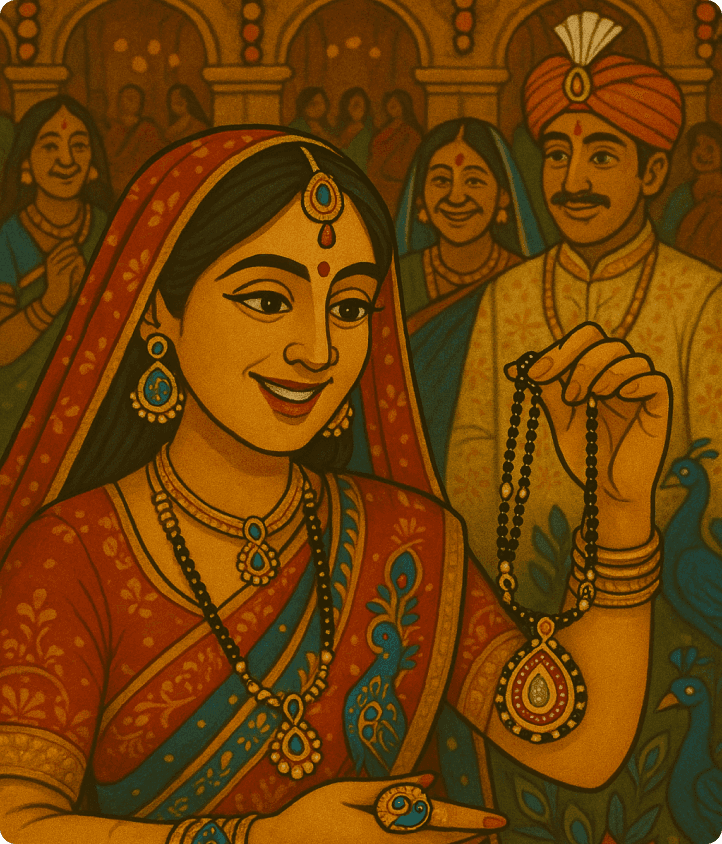
Design 186 began as a bride’s dream: a symbol of grace, protection, and timeless beauty.
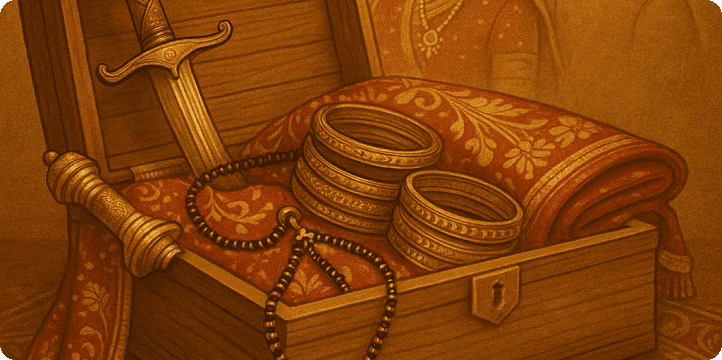
She came from the Darbar community, as did her soon-to-be husband. Among these राजपूत families, jewellery is more than an accessory- it's a legacy. These families don’t just buy ornaments; they dive deep into the meaning behind every motif, commission grand designs, and pass them on as heirlooms. Jewellery, in their world, protects daughters just as sons protect their wives; with honour, pride, and the metaphorical कृपाण.
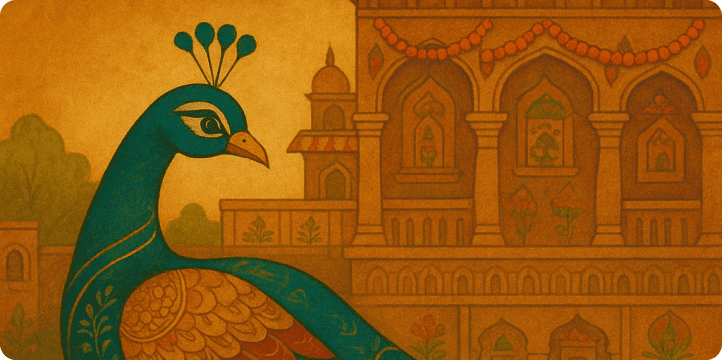
The bride loved peacocks. She said she wanted something opulent, something divine: something that spoke of elegance and strength. And as she spoke, her presence itself reminded us of a peacock ready to bring grace, fertility and abundance to a family that had been waiting far too long for it.
We took her wish to the team. Hours were spent sketching, arguing, refining. Dozens of drafts were scrapped. And finally, the design revealed itself- a bright blue gem at its centre, encircled by layers of stones and bare gold strips, shaped like the layered eye of a peacock feather.
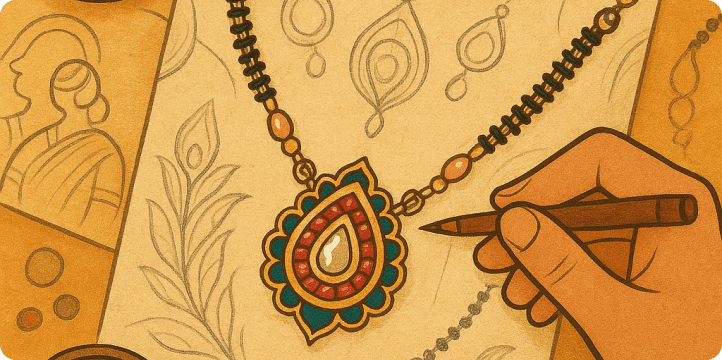
What made her light up most was how the motif carried into her lighter, everyday mangalsutra: Design 186. Crafted in मीनाकारी, it fused cultural symbolism with a touch of modernity. She could wear it not just on her wedding day, but every day that followed.
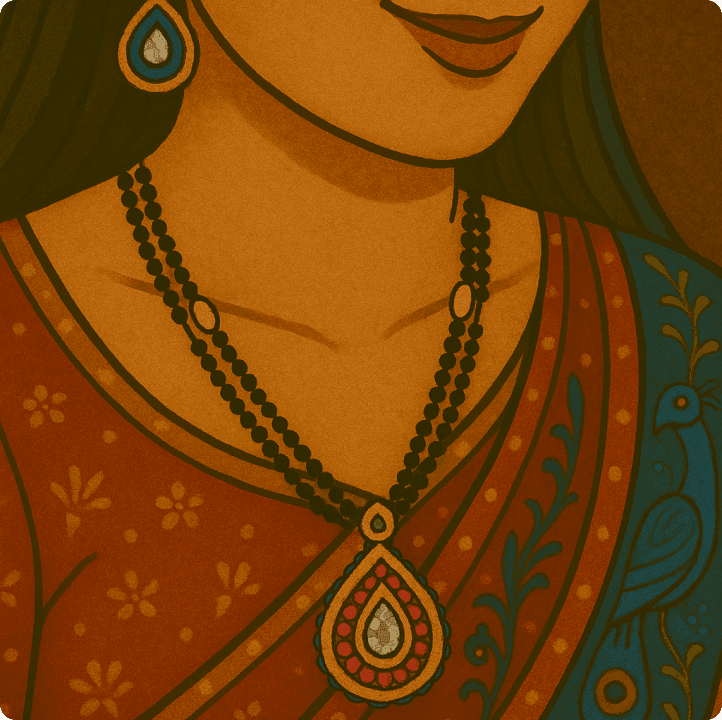
When both families saw the final piece, we knew we had done it right. Her mother-in-law admired how the traditions were woven in. The bride loved that her मंगलसूत्र felt like her; free, vibrant, and timeless.
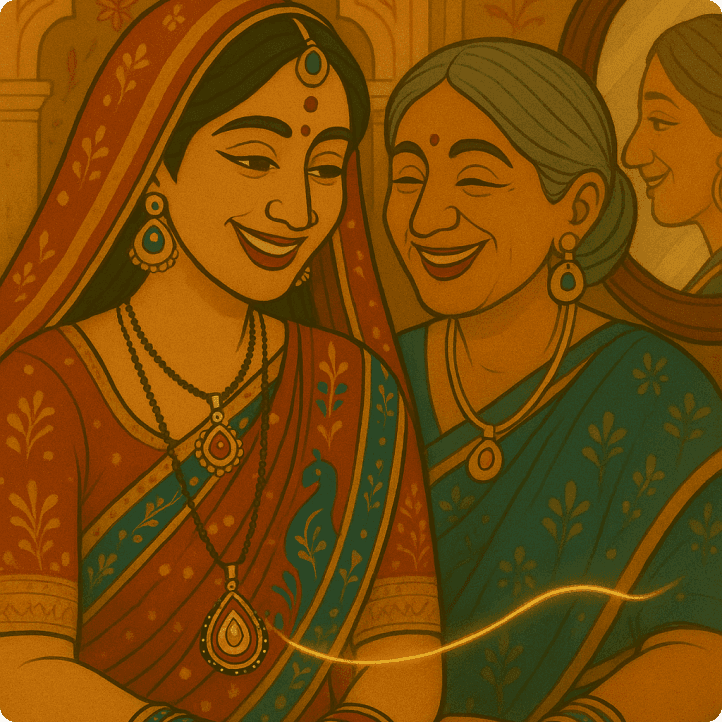
We often think of feminism as protest or power. But that day, it looked like a quiet conversation- two women from different generations, side by side, wearing pride, tradition, and freedom like jewellery.
That’s true empowerment.